|
Getting your Trinity Audio player ready...
|

Sunny Toy walked out on the wooden observation deck at Baylands Nature Preserve in Palo Alto during a low tide. In the mud she spotted a glass bottle, chunks of wood and faint footprints, and she leaned over her notebook to sketch and color what she saw, noting the temperature and topography.
Toy visited the preserve as part of a field trip with Kate Rutter’s nature journaling class, hosted by the The Foster Museum in Palo Alto. Toy, a Mountain View resident, credits the class, which teaches students to write and draw pictures to record an observation in nature, for helping her notice things she might have otherwise overlooked.
“She helps us slow down to observe and record and she does it in a joyful way,” Toy said of Rutter.

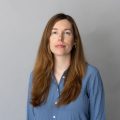
Rutter, an Emeryville resident and former product designer, said the practice has real mental and social health benefits, such as calmness and restfulness.
A 2025 study by Penn State University backs up this notion. Although it’s not a new practice, nature journaling gained popularity during the COVID-19 pandemic as people looked for more outdoor activities, according to the study.
“Humans need nature; nature needs humans,” said Rutter, a certified California naturalist who started nature journaling about a decade ago. “We’re not joking when we say ‘touch grass’ — hopefully native grass.”
Her class curriculum is based on books like “The California Naturalist Handbook,” “Keeping a Natural Journal” and “The Laws Guide to Nature Drawing and Journaling.” Rutter also integrates her own book of 26 hand-illustrated native plants called “Bay Area Botanical.”
“It just absolutely transformed my life,” said Rutter of nature journaling. “It’s not only an art practice, it’s a science practice, nature practice, poetry practice. … Learning to draw from observation, understanding how light works, understanding how to make something simplified, more diagrammatic, is a real skill, and that opens you up to seeing differently.”

Now, as a teacher, Rutter helps people connect with the outside world — be it a houseplant, fruit, vegetable, “things sometimes people call weeds,” “really weird bugs” or a “cool root.”
“There is something enchanting in everything that grows,” she said.
‘Jewel of a museum’
Rutter began teaching classes at The Foster in 2023 after meeting the museum founder, watercolorist Tony Foster, at a conference hosted by the nonprofit Wild Wonder. Foster’s wilderness landscapes, displayed in the museum, offer fitting inspiration for nature journaling, Rutter and her students said.

“I fell in love with just the fact that there is this jewel of a museum which is free and accessible in this fairly commercial area of Palo Alto … totally dedicated to the celebration and protection of the world’s most wild spaces,” Rutter said.
She noted the number-one reason a person may not start nature journaling is because they are concerned they are not skilled at drawing. Sue Cashel, a Palo Alto resident, was in this camp.
“I wasn’t intimidated at all after about a minute (into class),” said Cashel, who took the course about a year ago. “You didn’t have to know how to draw or this particular form of capturing these observations to paw on ahead and make it your own.”
Inspired after taking the course, Brandi Filbert, a science and art teacher at Alta Vista High School in Mountain View, used a grant to bring Rutter to teach students in the school’s Serenity Garden for 10 weeks.

Filbert earned a nature journaling certificate recently.
“Now I have the resources and learning to confidently continue working with my current students by reviewing topics and skills that Kate covered and just spending more time on each, since the time we spent with her went by so quickly,” said Filbert in an email.
Registration
Sign-up is open for a four-class spring series on March 8 and March 15. There are two classes on each day, but you can sign up for just one class. Classes are two and a half hours long. Sign up begins March 15 for the summer series, which takes place on May 17 and June 14.
Nature Journaling: Explore, Express, Connect!, The Foster Museum, 940 Commercial St., Palo Alto. $45 per class at the Foster, $20 for a field trip to the Baylands, or $140 for each seasonal series. Class materials are included in cost. thefoster.org/natural-journaling.
Most Popular
 ‘No remorse’: Woodside man sentenced to 60 years in prison for sexually abusing childrenSeptember 4, 2026 12:05 pm