|
Getting your Trinity Audio player ready...
|

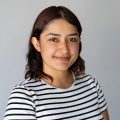
Stanford University student Diba Dindoust often reflects on the fond evenings she spent at the dinner table with her family because it wasn’t just a moment to eat, it was a meeting place for discussion.
Her mother, who was a psychiatrist, often discussed mental health trends, cases and garnered feedback from Dindoust, who learned that systemic, cultural and physical factors could affect a person’s health.
Soon, she fell in love with life sciences, Dindoust said. That interest became even more prevalent in middle school when a close family member was diagnosed with breast cancer.
“The thing that stood out about her case is she was able to catch it early because she knew what signs to look out for,” she said. “It’s also what led her prognosis to be so good.”
For Dindoust, the topic of health isn’t just “medicine,” or a career path – it’s a lifestyle. It’s something people can casually integrate in their day-to-day conversations. It’s the reason she created a nonprofit, the Palo Alto Women’s Collective, which aims to provide health education in trusted spaces like hair salons, her first stop in facilitating brief discussions on cancer screening.
Dindoust has worked with four East Palo Alto and Menlo Park salons in the past three months. Each has expressed interest in continuing their work as local women struggle to access healthcare.
So far, she has worked with Estrellas Beauty Salon, Ackerly’s Hair Salon, Las Tijeras Magicas and Elegancia Beauty Salon, teaching interested stylists how to lead short conversations about cervical and Breast Cancer screening.
In the five-minute-long script, stylists inform people that they should begin screening for cervical cancer at age 21, regardless of sexual activity, complete a pap smear every three years until age 30, then every five years afterward, to ensure cervical health.
Related to breast health, women should begin mammograms from 40 to 50 and begin self-exams at 20 years old to understand their breasts, rather than diagnose, according to American Cancer Society guidelines.
To complete a self-exam, someone should lift their arms, look in the mirror from the left and right to familiarize themselves with the appearance, and feel for hard lumps that feel like a lemon seed, according to the script, which is adapted from a global breast health nonprofit Know Your Lemons.
If it feels like soft beans or peas, according to the script and nonprofit, it’s not a problem.
Nine of 10 women who have breast cancer have no family history and if someone suspects breast cancer symptoms before the age of 40 they can book an MRI, ultrasound or biopsy with a doctor, according to the script.
Using donated posters from breast health nonprofit Know Your Lemons, Dindoust sat with a stylist from Ackerly’s salon in May, discussing the information as the woman nodded.
“A mammogram feels like having your blood pressure taken,” Dindoust said in Spanish. “Do it two or three days after your period to experience less tenderness.”
One salon owner was so intrigued by the session, Dindoust said, she asked her to present the information to her family members as well.
Often, Dindoust feels that people are warned about cancer and are afraid of it, but don’t have any further information, especially in immigrant communities.
As an immigrant herself, Dindoust, who moved from Iran to Canada, then from Canada to the United States, understands the struggle to navigate local healthcare systems, she said.
“Our cultures are very similar in the fact that while breast cancer is a huge fear, we just don’t talk about it enough unless your family has some history with it,” she said.
In the early stages of her nonprofit, she’s leading a one-woman show, walking to local salons with posters in-hand to gauge interest. While some salons have been apprehensive about the work, others in Spanish-speaking communities have shown enthusiasm.
One East Palo Alto shop owner told Dindoust that many women in the city live in crammed spaces with large families, struggling to pay bills, find housing and access fresh food.
“These things indirectly affect cancer,” Dindoust said. “If you’re struggling to access basic necessities, you struggle to go to regular checkups.”
On top of affordable and diverse health resources, Dindoust is compiling a list of wraparound services to provide each salon. In an effort to expand, she is looking to garner volunteers and land sponsorships with companies and big beautify brands to provide new equipment to the salons.
Right now, Dindoust, who is a rising junior working toward her bioengineering degree, hopes to expand to Redwood City businesses and eventually throughout the Bay Area to continue to make health an everyday practice.
“Women go to the hair salon, they chat to their hair stylist, they really trust them,” she said. “I hope that can happen here.”